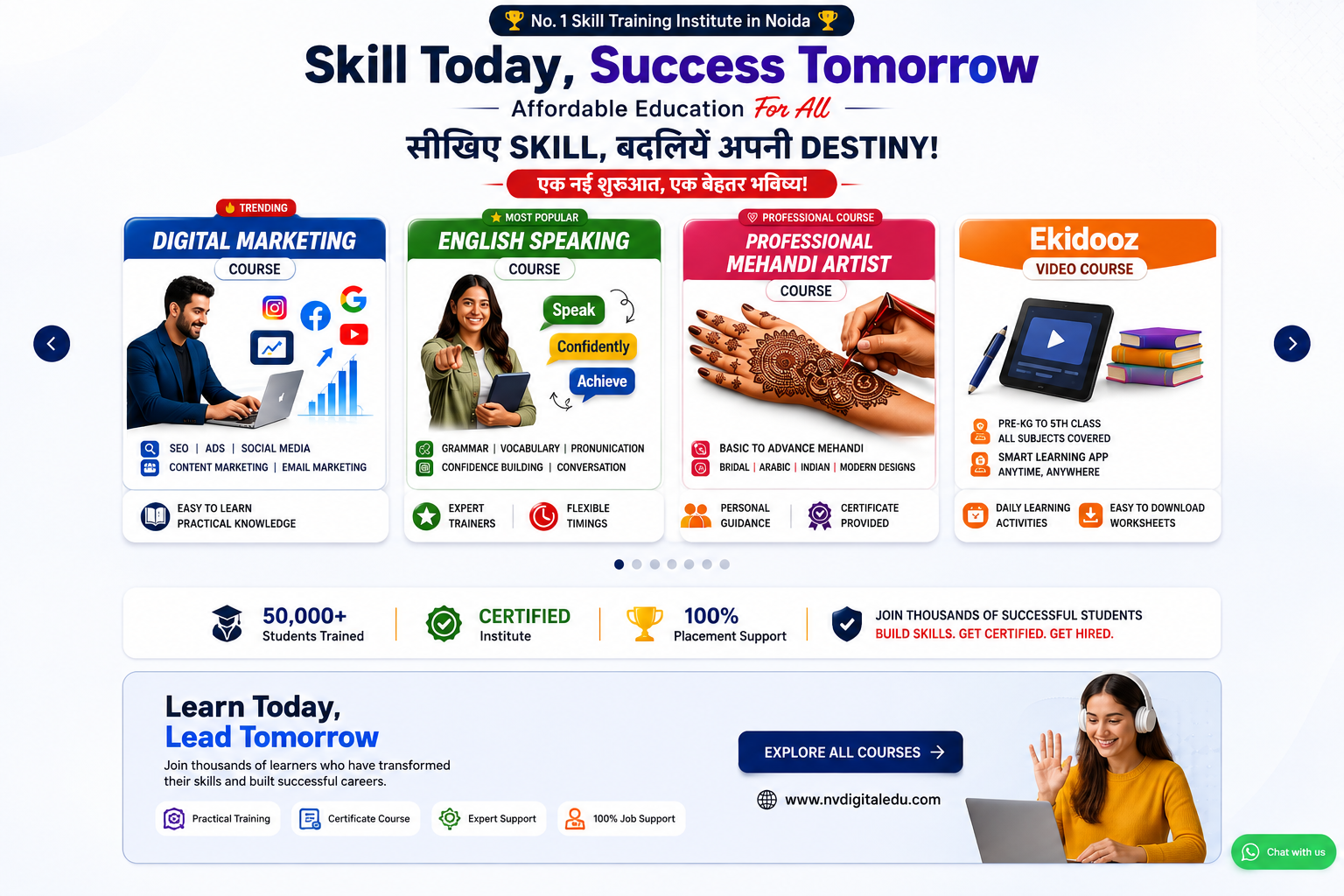

A digital marketing course for beginners can help students, job seekers, working professionals, freelancers, and business owners build practical online marketing skills and understand how to start a career in digital marketing.As more businesses move online, learning digital marketing can open different career and earning opportunities.
If you are a beginner and want to understand digital marketing from the basics, this guide will help you learn what digital marketing is, what skills you need, how to start learning, and how a digital marketing course can help you build a career.
In this guide, we will also explore digital marketing career options, course duration, practical skills, and the steps you can follow to start your digital marketing journey in 2026.
What Is Digital Marketing?
Digital marketing is the process of promoting products, services, brands, or businesses through online channels. It helps businesses reach the right audience, build awareness, generate leads, and increase sales using digital platforms.
Some important areas of digital marketing include Search Engine Optimization (SEO), social media marketing, Google Ads, content marketing, email marketing, website optimization, and analytics. Beginners can learn these skills step by step and apply them through practical projects.
Why Learn Digital Marketing as a Beginner?
Learning digital marketing as a beginner can help you develop practical skills that are useful across different industries. Businesses need people who can help them improve their online presence, reach customers, generate leads, and grow their brands.
Digital marketing can also provide different career paths, including jobs, freelancing, and opportunities to grow your own business. With consistent learning and practical experience, beginners can gradually build the skills and confidence needed to start a career in digital marketing.
Who Can Learn Digital Marketing?
Digital marketing can be learned by people from different backgrounds. You do not need to be from a specific academic or professional field to get started.
Students can learn digital marketing to develop career-ready skills. Job seekers can use it to explore new career opportunities. Housewives can learn it as a flexible skill, while working professionals can add digital marketing to their existing skills. Business owners and freelancers can also use digital marketing to promote their services, reach customers, and generate leads.
What Do You Learn in a Digital Marketing Course for Beginners?
SEO (Search Engine Optimization)
Search Engine Optimization (SEO) helps websites appear in search engine results when people search for relevant information, products, or services.Beginners can learn important SEO skills such as keyword research, on-page optimization, content optimization, internal linking, and basic technical SEO.
Keyword Research
Keyword research is the process of finding the words and phrases people use when searching online. It helps digital marketers understand what their target audience is looking for and create content that matches those search queries. Beginners can learn how to find relevant keywords and use them naturally in website content.
Content Marketing
Content marketing focuses on creating useful and relevant content to attract and engage a target audience. Beginners can learn how to plan content, write helpful articles, create social media content, and use content to support SEO, brand awareness, and lead generation.
Social Media Marketing
Social media marketing involves using platforms such as Instagram, Facebook, LinkedIn, and other social channels to build brand awareness and connect with an audience. Beginners can learn how to create engaging content, understand audience behaviour, plan social media campaigns, and use social platforms to support business growth.
Google Ads
Google Ads helps businesses reach potential customers through paid advertising on Google and its partner networks. Beginners can learn the basics of search advertising, campaign structure, keywords, ad copy, targeting, budgeting, and measuring campaign performance.
Website Basics
Understanding basic website concepts is useful for digital marketers because websites are often the main place where visitors learn about a business, product, or service. Beginners can learn about website structure, landing pages, user experience, basic WordPress concepts, and how website content supports SEO and lead generation.
Google Analytics
Google Analytics helps digital marketers understand how visitors interact with a website. Beginners can learn how to monitor website traffic, understand user behaviour, measure engagement, and evaluate which marketing activities are helping bring visitors and leads.
Google Search Console
Google Search Console helps website owners understand how their website performs in Google Search. Beginners can learn how to check search queries, impressions, clicks, average position, indexing status, and other important search performance information.
Lead Generation
Lead generation is the process of attracting potential customers and encouraging them to take an action, such as submitting a form, making an enquiry, or contacting a business on WhatsApp. Beginners can learn how digital marketing campaigns, landing pages, website forms, and clear calls to action can help businesses generate relevant leads.
Practical Projects
Practical projects help beginners apply digital marketing concepts instead of only learning them theoretically. Working on projects such as SEO optimization, content planning, social media campaigns, Google Ads exercises, website analysis, and lead generation activities can help build practical experience and confidence.
Digital Marketing Career Options for Beginners
Digital Marketing Executive
A Digital Marketing Executive supports a company’s online marketing activities across different channels. The role may involve SEO, content marketing, social media, email marketing, website updates, campaign coordination, and basic performance analysis. It can be a suitable starting point for beginners who want to build a career in digital marketing.
SEO Executive
An SEO Executive works on improving a website’s visibility in search engine results. The role can include keyword research, on-page SEO, content optimization, internal linking, basic technical SEO, and monitoring search performance. It can be a good entry-level career option for beginners interested in search marketing.
Social Media Executive
A Social Media Executive manages a brand’s presence on social media platforms. The role can include creating and scheduling content, engaging with audiences, monitoring performance, and supporting social media campaigns. Beginners who enjoy content creation and communication may find this a useful career option.
Content Marketing Executive
A Content Marketing Executive helps create and manage content that attracts and engages a target audience. The role may include writing blog posts, creating website content, developing social media content, planning content calendars, and supporting SEO strategies. It can be a good career option for beginners who enjoy writing and creative communication.
Performance Marketing Executive
A Performance Marketing Executive works on paid digital advertising campaigns with a focus on measurable results. The role may involve Google Ads, campaign targeting, budgeting, ad optimization, conversion tracking, and performance analysis. Beginners can develop these skills through structured learning and practical campaign exercises.
Digital Marketing Analyst
A Digital Marketing Analyst uses data to understand how digital marketing activities are performing. The role may include analysing website traffic, campaign results, audience behaviour, conversions, and other marketing metrics. Beginners with an interest in numbers, data, and marketing can gradually build skills for this career path.
Is Digital Marketing Difficult for Beginners?
Digital marketing does not have to be difficult for beginners. You do not need an advanced technical background or programming knowledge to get started. The most important things are understanding the fundamentals, practising regularly, and learning how different digital marketing channels work together.
Some areas may take more time to understand than others, but beginners can learn step by step through practical examples and real projects. Consistent practice can help build both skills and confidence.
How to Start Learning Digital Marketing Step by Step
Step 1: Learn the Fundamentals
Start by understanding the basic concepts of digital marketing and how different channels work. Learn the fundamentals of SEO, content marketing, social media marketing, Google Ads, websites, analytics, and lead generation before moving into more advanced topics.
Step 2: Practise Digital Marketing Skills
Practice is important for beginners because digital marketing is a practical skill. Work on small projects such as keyword research, SEO optimization, content creation, social media planning, website analysis, or basic advertising exercises. Regular practice helps you understand how digital marketing works in real situations.
Step 3: Work on Real Projects
Real projects give beginners an opportunity to apply what they have learned. You can work on a sample website, create an SEO plan, develop a content calendar, plan a social media campaign, or practise analysing website and marketing data. Practical project experience can also help you build examples for your portfolio.
Step 4: Build a Portfolio
A portfolio can help beginners demonstrate their digital marketing skills to potential employers or clients. Include relevant projects such as SEO work, content samples, social media plans, website improvements, or campaign exercises. A simple, well-organized portfolio can make your practical skills easier to understand.
Step 5: Apply for Internships and Jobs
Once you have learned the fundamentals and completed some practical projects, start exploring internships and entry-level job opportunities. Your portfolio can help demonstrate what you can do. Apply for roles that match your current skills and continue improving your knowledge while gaining practical experience.
Step 6: Keep Improving Your Skills
Digital marketing keeps changing as search engines, advertising platforms, social media, and online customer behaviour evolve. Continue learning new tools, strategies, and industry practices. Regular learning and practical experience can help you stay updated and build a stronger digital marketing career.
Digital Marketing Course Duration
The time required to learn digital marketing depends on your learning pace, the skills you want to develop, and how much practical experience you gain. A structured beginner-friendly course can provide a clear learning path and help you build foundational skills within a few months.
A practical three-month learning approach can give beginners enough time to understand important digital marketing concepts, practise different skills, and work on projects. The goal should not only be completing a course but also developing practical skills that can be applied in real situations.
Digital Marketing Course vs Self-Learning
Beginners can learn digital marketing through a structured course or by studying independently. Self-learning provides flexibility and allows you to choose what to study, while a structured course can provide a clear syllabus, guidance, practical projects, and a planned learning path.
The right approach depends on your learning style and goals. For beginners who are unsure where to start, structured learning can make the process easier to follow and help them stay consistent.
How to Choose the Right Digital Marketing Course
When choosing a digital marketing course, beginners should look for a practical and well-structured syllabus rather than focusing only on the course certificate. The course should cover important areas such as SEO, content marketing, social media marketing, Google Ads, analytics, website basics, and lead generation.
Practical projects, guidance, learning support, and opportunities to apply the skills can also make a course more useful. Choose a course that matches your learning goals and gives you enough practical experience to build confidence.
Career Opportunities After Learning Digital Marketing
Learning digital marketing can open opportunities across different types of work. Depending on your skills and experience, you can explore entry-level jobs, freelancing, business promotion, content creation, or specialised areas such as SEO and performance marketing.
Digital marketing skills can also be useful for entrepreneurs and business owners who want to promote their own products or services online. As you gain experience, you can choose a career direction that matches your interests and strengths.
Final Thoughts
Digital marketing can be a practical career skill for beginners who are willing to learn and practise consistently. You can start with the fundamentals, develop practical skills, work on real projects, and gradually build a portfolio.
Whether your goal is to find a job, start freelancing, promote a business, or explore a new career direction, learning digital marketing can help you build useful skills for the online world.
Ready to Start Your Digital Marketing Journey?
If you are ready to build practical digital marketing skills, explore our Digital Marketing Course to learn important concepts through a structured and practical approach.